
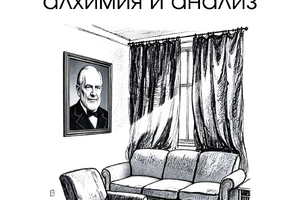
Вот так тоже бывает - напишешь книгу, а потом оказывается, что она - к юбилею Карлоса Кастанеды (25-го декабря - 100 лет)...
“I Am the Beginning of Time”: Why Young People Believe the World Was Born With Them

Author: Elena Nechaeva —
psychologist, psychoanalyst
In practice since: 2007
Author’s website: neacoach.ru
Contact: nechaevacoach@mail.ru
Yekaterinburg, November 24, 2025
Dear colleagues!
This English translation is, in a sense, an experiment. I do not speak English myself. Fortunately, artificial intelligence now exists—and I turned to it for help. I am unable to verify how nuanced, precise, or clinically appropriate the translation is, but I sincerely hope for the best!
— Elena Nechaeva
Why are so many young people sincerely convinced that the “real world” began with them—and that everything that came before feels like a distant, unreal antiquity?
This is not stupidity, nor narcissism in the everyday sense, but a profound symptom rooted in the very nature of the human “I.”
Drawing on psychoanalysis, philosophy, and contemporary culture, this article explores how the fear of death, repression, digital acceleration, and the rupture of historical time compel us to erase the past in order to feel real.
It also examines why Freud, Lacan, and Heidegger—writing a century ago—still help us understand what is happening to us today.
Because even those who seem to be the beginning of time always had their own “before.”
1. Introduction: “The World Began in 2005”
Imagine telling a student that in the early 1990s, people listened to music on cassette tapes and learned the news from newspapers.
They look at you with genuine bewilderment: “Okay, let’s say that’s true… But who even lived back then?”
There is no mockery or foolishness in their eyes—only authentic astonishment. For them, “life” is not merely biological existence; it is something more: meaningfulness, coherence, presence within a cultural field.
And since the culture they know did not exist before them, then, in their view, there was no real world before them.
This feeling—that everything important began with oneself—is familiar to many.
It is not confined to a single generation: as early as the 1930s, the writer F. Scott Fitzgerald observed, “Youth always believes it is the first to experience such emotions.” But today, this experience has taken on a new form.
It is no longer just a poetic illusion of youth—it has become a structural feature of subjective time perception in the digital age.
Psychoanalysis invites us not to condemn this as naïveté, but to recognize it as a symptom: a defensive mechanism of the unconscious that helps manage anxiety, identity, and even the fear of death.
After all, to acknowledge that the world existed before you is also to accept that it will exist without you.
And this, as Freud wrote, is “the hardest task ever imposed upon human culture”—the task of reconciling oneself with one’s own finitude.
In this article, we will try to understand why young people are so convinced that “everything started with them”—and what actually lies behind this illusion of a “world from zero.”
2. The Phenomenon of “Historical Amnesia”: Not Forgetting, but Repression
When we say that young people “know nothing about the past,” it’s easy to lapse into moralizing: “In our day, we were taught to respect history!”
But psychoanalysis urges us to look deeper.
The issue is not a lack of knowledge—there is more of it available today than ever before—but rather how the unconscious processes the past.
In his 1915 essay “Repression,” Sigmund Freud wrote: “Repression is the process by which a representation or affect is excluded from consciousness—not because it has been forgotten, but because it is unacceptable to the ego.”
This is precisely what happens with historical past. It is not so much forgotten as repressed—because it threatens the fragile architecture of identity.
If one acknowledges that love, rebellion, creativity, and suffering already existed before oneself, then one’s sense of uniqueness loses its sharpness.
Yet it is precisely this feeling of uniqueness that grants the young subject a sense of the reality of their “I.” Jacques Lacan further developed this idea by distinguishing three registers of the psyche: the Real, the Symbolic, and the Imaginary.
The past—especially in its raw, unedited form—belongs to the Real: it is chaotic, contradictory, and resists smooth, coherent narratives.
But the young “I” is constructed within the Imaginary: the realm of mirrors, reflections, and idealized images (including the ideal “I”).
To preserve the integrity of this image, the unconscious cuts off everything that might disrupt it.
Thus, historical past becomes something distant and “not about me”—like an old film without subtitles.
Not because it’s boring, but because it is too real.
The irony is that the more information about the past becomes available—through archives, documentaries, online lectures—the more vigorously repression operates. In earlier times, historical information was not so abundant; it had to be deliberately sought out—in physical libraries, archival records—and one had to know what to look for.
In a sense, information about “what happened before me” had to be earned through effort and intention (professional historians still operate this way, but that is their vocation).
Today, digital algorithms deliver this information effortlessly, without requiring any active engagement from the user.
As a result, the past is no longer merely “out there”; it constantly intrudes into the present, demanding interpretation, positioning, and responsibility.
But the young subject, who has not yet firmly established their place in the world, often prefers to say: “That wasn’t my time. My time is right here, right now.”
Thus, historical amnesia emerges not as a deficit of memory, but as a defense against anxiety—the anxiety of being merely an episode in someone else’s story, rather than its author.
3. Narcissism as a Mode of Existing in Time
We are accustomed to grumbling about “youthful narcissism”—especially in the age of selfies, Stories, and personal branding.
But psychoanalysis reminds us: narcissism is not a moral failing; it is a necessary developmental stage in the formation of the “I.”
As early as 1920, in Beyond the Pleasure Principle, Freud wrote: “Narcissism is not a pathology, but a phase of development without which the subject cannot emerge.”
The crucial point is not to become stuck in this phase. In adolescence, narcissism takes on particular importance.
To feel like someone—rather than just another face in the crowd—a young person must temporarily believe: “The world revolves around me.”
This is not egocentrism in the everyday sense; it is an ontological necessity.
Today, this stage has been both prolonged and intensified.
Social media has created the perfect environment for the narcissistic mirror: every post is an invitation for confirmation of existence.
“Do you see me? Do you ‘like’ me? Then I am real.”
Within this logic, the past loses its relevance—because it cannot respond. It cannot “like” your photo, leave a comment, or affirm your significance.
The philosopher and psychoanalyst Julia Kristeva observed in Fear of the Modern World (2001): “The contemporary subject no longer seeks recognition in history or tradition—they demand immediate validation of their existence, here and now.”
Such validation is possible only in the present—or rather, in an endless chain of “nows.”
The past, by contrast, becomes background scenery, décor, or mere “content,” but not lived experience. It is essential not to confuse this with simple self-love.
This is not about young people “loving themselves more than others.”
Rather, in a context of fluid identities and the absence of stable social roles, the only remaining anchor is the self—fragile, perpetually in need of recharging.
Narcissism thus becomes a way to halt time—or, more precisely, to fold it into a single point.
If everything that matters is happening to me right now, then there is no past to judge me and no future to frighten me.
There is only me—and my screen, reflecting a world I have created myself.
And in this act, there is not vanity, but a desperate attempt to hold on to reality in a world that no longer offers stable coordinates.
4. Anxiety in the Face of Infinity: Why the Past Is Frightening
To acknowledge that the world existed before you is to confront one of the most profound existential truths: you did not begin history, nor will you bring it to an end.
For a young consciousness only just beginning to sense itself as a subject, this is not an abstract idea—it is a trauma.
It feels like being told: “You were only just born, and soon you will die,” or “You are mortal, because life existed before you—and it ended.”
Psychoanalysis has long linked the fear of the past with the fear of death.
In Beyond the Pleasure Principle (1920), Freud introduced the concept of the death drive (Thanatos)—not as a literal wish to die, but as a deep psychic pull toward stillness, toward a return to the inorganic state “before life.”
To prevent this drive from fragmenting the psyche, it is constantly repressed.
One of the most effective forms of this repression is the illusion of a beginning.
If the world began with me, then death is not a return to an endless temporal flow—it is simply the end of everything.
This is terrifying, but at least it is coherent.
But if the world existed before me and will continue after me, then I am merely a fleeting flash in an infinite chain of generations.
My life acquires… insignificance.
The philosopher Martin Heidegger, whose ideas resonate deeply with psychoanalytic understandings of anxiety, wrote in Being and Time (1927): “Authentic being-toward-death reveals itself only when Dasein [human existence] recognizes itself as ‘thrown’ into the world—without having been asked for its consent.”
It is precisely this “thrownness” (Geworfenheit) that evokes dread.
To avoid drowning in this dread, the young person unconsciously rewrites history: they were not thrown into a pre-existing world—they created it.
Thus, anxiety in the face of infinity is replaced by the illusion of control.
This defense mechanism is especially acute today, in an era when the future appears profoundly uncertain: climate catastrophes, economic instability, the collapse of traditional life scripts, and global conflicts all erode any sense of continuity.
If tomorrow is unpredictable, then at least yesterday can be declared unreal.
Therefore, the denial of the past is neither stupidity nor laziness.
It is a defense against existential cold—a desperate attempt to warm oneself in one’s own light while the world outside feels too vast, too ancient, and too indifferent.
5. The Culture of Acceleration and the Collapse of Historical Time
If young people lived in a world where time flowed linearly—where each event had a cause, and each generation inherited and reinterpreted the experience of the one before—then the illusion of a “world from zero” would hardly be so persistent.
But we live in an era that philosopher Paul Virilio termed the “logic of speed,” and sociologist Hartmut Rosa described as “social acceleration.”
Under the pressure of incessant information flows, ever-changing trends, and an endless stream of “content,” historical time collapses.
Past, present, and future no longer form a continuous line—they merge into a single digital “here-and-now.”
On TikTok, a viral dance from 2024 appears alongside footage from a 1985 film; a Nietzsche quote is repackaged as a motivational post, stripped of context.
Everything becomes “vibe”—aesthetic, mood—but not history.
Jean Baudrillard warned in Simulacra and Simulation (1981): “When images and signs no longer refer to reality, but only to other signs, the very possibility of historical meaning disappears.”
This is precisely what is happening.
The young person does not reject the past; they cannot enter it—because it is no longer presented as narrative, but as a set of fragments ready for consumption.
History has been transformed into “content,” and content, by definition, requires no continuity.
It exists for an immediate effect—and vanishes just as quickly, yielding to the next sensation.
Francis Fukuyama, analyzing the post-historical condition, wrote: “If history is the struggle for recognition, then in a world where recognition can be bought with likes, history loses its driving force.”
Without this force, time loses direction.
It no longer “moves forward”—it spins in place, like a carousel of memes and trends. In such a world, the statement “everything has already happened” sounds not like wisdom, but like a verdict: If everything has already been done, why begin anything at all?
Conversely, the claim “nothing like this has ever happened before” offers the illusion of freedom, novelty, and the possibility of radical change.
Thus arises a paradox: the more information about the past becomes available, the less alive it feels.
And so it becomes easier to believe the world began with you—because only then can you feel that you are truly acting, rather than merely repeating someone else’s gestures.
6. Not a Vice, but a Symptom: What Lies Beneath?
It is easy to condemn young people for “historical ignorance” or “narcissism.”
But psychoanalysis teaches us to approach such phenomena not as moral failings, but as symptoms—signals of a deeper imbalance in culture and subjectivity.
The illusion that “the world began with me” is not a sign of stupidity; it is a form of adaptation to a world where the past no longer offers stable reference points, and the future offers no hope.
In traditional societies, the young person was integrated into a stable structure: family, craft, religion, national narrative.
Today, these structures are either dissolved or transformed into optional “lifestyle choices.”
Under such conditions, the assertion “I am the beginning” becomes a strategy of self-creation in a vacuum. If there is no ready-made script, one must write from a blank page.
And to make the page feel truly blank, everything written before must be erased.
This is not a rejection of history—it is an inability to enter it.
As the French psychoanalyst Pierre Fédida wrote: “The symptom is an attempt to say what cannot be expressed directly.”
Young people are not saying, “I’m afraid my life means nothing.”
They say, “Nothing interesting ever happened before.”
This is the same anxiety, dressed in irony or indifference.
Moreover, in a context where even the recent past—just ten years ago—already feels like “archaic” due to the speed of technological and cultural change, demanding that young people “remember” is to demand the impossible.
Memory does not operate in a vacuum.
It requires repetition, ritual, dialogue. But if society itself has ceased telling coherent stories about itself, how can an individual be expected to remember?
Thus, instead of reproach, we should ask a different question: How can we create conditions in which the past becomes not a burden, but a resource?
Not as a list of dates and names, but as a living field of possibilities, mistakes, and quests—in which one can recognize oneself.
Because, in truth, young people do not wish to deny the past.
They wish to find a place for themselves within it.
7. Conclusion to This Part: Restoring Time Means Restoring Connection
The illusion that the world began with us is ancient—almost archetypal. It lives in every adolescent, in every new generation.
But today it has acquired a particular urgency: no longer a poetic misapprehension, but a defense against a rupture in time itself.
Psychoanalysis reminds us: symptoms are not to be suppressed—they are to be understood.
And beneath this “historical amnesia” lies not laziness or selfishness, but a profound longing for significance, continuity, and hope.
To acknowledge that the world existed before me is to recognize that I am not alone.
That my fears, desires, and quests are part of something larger.
To acknowledge that the world will continue after me is to believe that my actions have weight—even if they go unseen by my contemporaries.
As Freud wrote in The Future of an Illusion (1927): “It is difficult for man to reconcile himself to the thought that he is not the center of the universe.
But it is precisely through this reconciliation that he attains maturity.”
Maturity does not consist in memorizing dates, but in sensing oneself as part of a dialogue that began long before us and will not end with us.
To restore time is to restore this connection—not through moralizing, but through lived narratives, through the vulnerability of elders, through the admission: “Yes, we also didn’t know what to do. We also made mistakes. But we tried—and you can carry it forward.”
Then the young person will cease to feel like the beginning of the world—and will begin to feel like its heir and co-author.
And in this, there is no loss of uniqueness—only the attainment of genuine freedom: the freedom to act, knowing you are neither the first nor the last.
Why I Cite Those Who Wrote “A Hundred Years Ago” Because I want to emphasize: what we now call a “Gen Z problem” is, in fact, a very old story.
Not a new illness, but an ancient wound—simply dressed in a new bandage.
Freud in 1915 and Heidegger in 1927 had already described the very anxiety that leads a young person to unconsciously “erase” the past.
They did not write about smartphones or TikTok—but about the fear of death, the need for uniqueness, and how difficult it is to accept that one is not a beginning, but an episode.
But—and this is essential to me as a psychoanalyst—Freud and Heidegger were not beginnings of time either.
They, too, had their “before.” Freud had Schopenhauer, Nietzsche, Greek tragedy, the Bible.
Heidegger had Aristotle, Kierkegaard.
They did not invent thought from nothing; they translated ancient experiences into a language intelligible to their era.
Their texts resonate with us today—not because they were the “first” or “last” sages, but because their language is closer to ours than, say, Plato’s or that of medieval scholastics.
They committed to paper what had previously been transmitted orally, poetically, ritually—and did so in a way that we, in the twenty-first century, can still hear.
Thus, when I refer to Freud, Lacan, or Heidegger, I am not “iconizing” them—placing them in golden frames as final prophets of truth.
They did not create thought anew; they listened for the echo of ancient questions and rendered them in a tongue that still speaks to us.
I am simply showing you the bridge they built between a distant past and their present.
And this article is my attempt to extend that bridge a little further: from their time to mine, and from mine to yours.
Because for me, psychoanalysis is not a museum of quotations—it is a living practice of transmission.
Trauma and hope are passed down through generations, and our task is not to interrupt this flow, but to weave our own voice into it.
And here lies the subtlest irony: even those we take as “beginnings”—whether Freud or a new generation convinced the world was born with them—always stood on the shoulders of those who are no longer here.
Every “I am the beginning” carries within it an unspoken “...but before me, there was...”
And perhaps this is the quietest, yet most essential lesson: No one starts from zero. Not even those who are certain they do.
For Those Who “Remember How It Was”: How Not to Become a Voice from the Past If you belong to the generation that “remembers cassette tapes,” “wrote letters,” and “went outside without asking for the Wi-Fi password,” you may watch today’s youth with sadness or irritation: “They know nothing, don’t respect history, think everything began with them.”
But pause for a moment—and recall: you, too, once “began the world anew.”
Your rebellion was in long hair, rock ’n’ roll, rejection of your parents’ values, and the conviction that “the older generation understood nothing.”
You, too, declared: “Everything used to be gray—but now there’s freedom!”—even if “everything before” was just ten years ago.
Only your “new world” was built on vinyl, street corners, and handwritten letters—while theirs is built on screens and digital communities.
The technologies have changed.
The psyche has not.
The need for uniqueness, fear of the future, and desire to be heard—these remain.
So instead of saying, “In our day, we respected the past!” try: “Tell me how you see the world.
And I’ll tell you how it looked to me—not to compare, but to understand.”
Don’t demand that young people “remember,” unless you are ready to share the past as lived experience—not as a list of rules.
Don’t say: “That’s already happened.”
Say: “I felt that way too. Would you like to hear what came of it?”
Because dialogue does not begin with a lesson—it begins with recognition: “You are not the first. But your path is yours. And I want to see it.”
List of Cited Authors and Primary Sources Sigmund Freud
• “Repression” (Die Verdrängung, 1915) — on repression as a defense mechanism of the ego.
• Beyond the Pleasure Principle (Jenseits des Lustprinzips, 1920) — on narcissism as a developmental stage and the concept of the death drive (Thanatos).
• The Future of an Illusion (Die Zukunft einer Illusion, 1927) — on the difficulty of reconciling with the fact that the human being is not the center of the universe.
Jacques Lacan
• Theory of the three registers of the psyche: the Real, the Symbolic, and the Imaginary — developed primarily in his seminars of the 1950s–1970s (notably Seminar XI, 1964).
While no direct quotation is used, the conceptual framework is applied in accordance with Lacanian theory.
Martin Heidegger
• Being and Time (Sein und Zeit, 1927) — on the concepts of Geworfenheit (“thrownness”) and Being-toward-death. Julia Kristeva
• Au risque de la pensée (2001; sometimes translated into Russian as “Fears of Modernity”) — on the contemporary subject and the demand for immediate recognition.
Jean Baudrillard
• Simulacra and Simulation (Les simulacres et la simulation, 1981) — on the collapse of the referential link between signs and reality.
Francis Fukuyama
• The idea of “the end of history” and post-historical consciousness originates in his 1989 essay “The End of History?” and the 1992 book The End of History and the Last Man.
The article draws on an interpretation of his thesis regarding the loss of historical dynamism in the post-ideological era. Paul Virilio
• The concept of “the logic of speed” appears in Speed and Politics (Vitesse et politique, 1977) and subsequent works on social and technological acceleration. Hartmut Rosa
• Acceleration: The Change of Time Structures in Modernity (Beschleunigung, 2005) — a sociological analysis of social acceleration as a defining feature of contemporary life.
Pierre Fédida
• French psychoanalyst; the formulation that “the symptom is an attempt to say what cannot be expressed directly” reflects his broader theoretical stance, particularly in works on melancholy and psychosomatics (e.g., Le site de l’étranger, 2002).
The phrasing in the article is a paraphrased but faithful representation of his approach.
F. Scott Fitzgerald
• Referenced without a direct quotation, alluding to his reflections on youth and the illusion of novelty in essays and letters from the 1930s.
Indirectly referenced intellectual predecessors (mentioned in the context of Freud’s and Heidegger’s philosophical lineage, without direct citation or textual analysis):
• Arthur Schopenhauer
• Friedrich Nietzsche
• Søren Kierkegaard
• Aristotle
• Plato
About the Author
Elena Nechaeva was born, lives, and works in Yekaterinburg. She is the author of books on psychology and psychoanalysis, as well as paintings in the genre of Ural underground art and music videos. She has been practicing as a psychologist and psychoanalyst since 2007, offering in-person sessions in Yekaterinburg and online consultations.
Author’s website: neacoach.ru
Contact: nechaevacoach@mail.ru